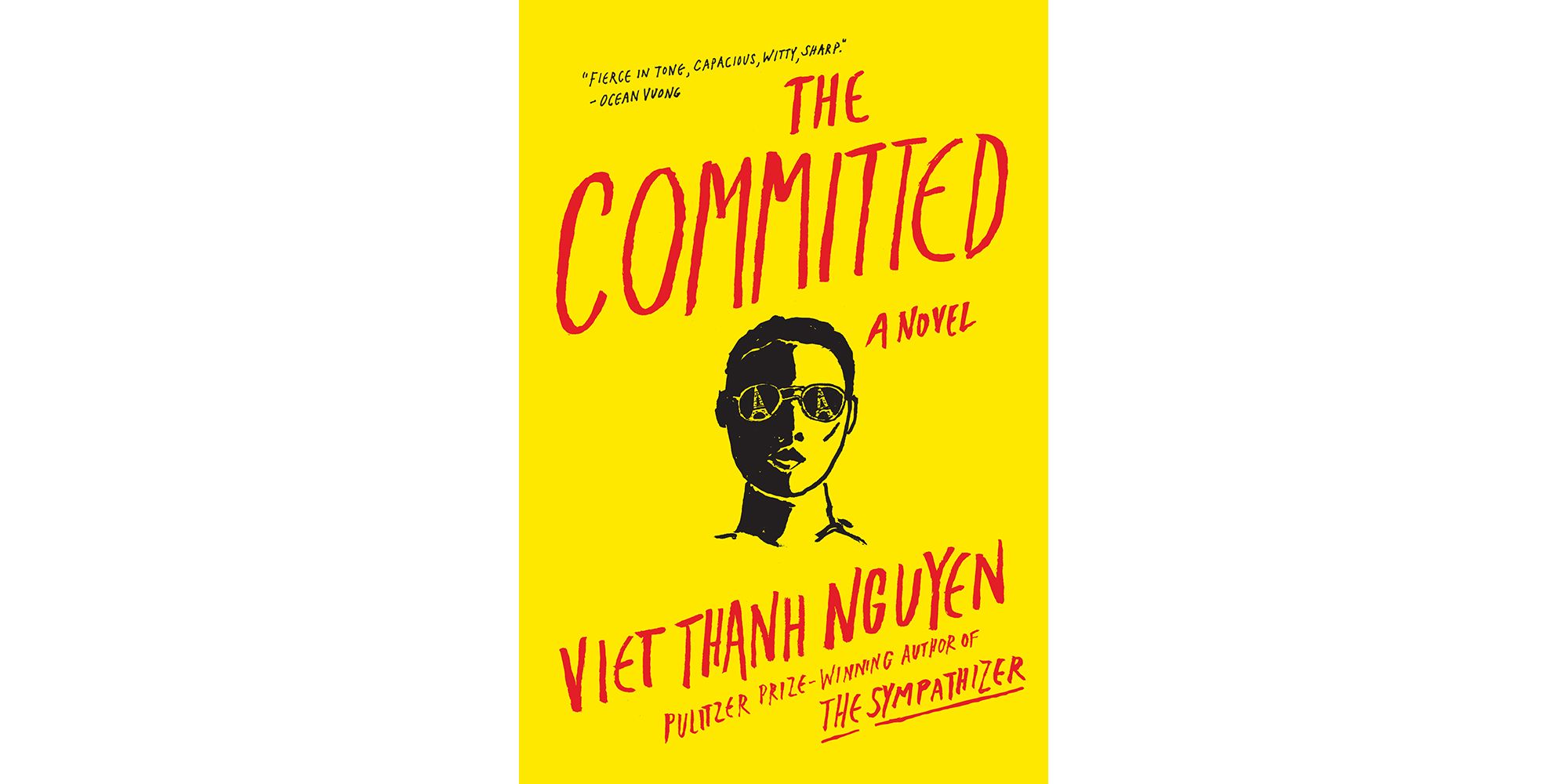
Some sequels try to be bigger. This one tries to be sharper. If The Sympathizer feels like a confession written with a grin you don’t fully trust, The Committed feels like the same voice walking into a new city and noticing how every empire keeps its receipts.
Together, the sympathizer and the committed read less like “Book 1 / Book 2” and more like an argument that changes rooms but never changes its target.
A quick The Sympathizer summary
The Sympathizer is a novel about a narrator split down the middle—by heritage, ideology, language, and the stories he’s forced to tell. Set around the fall of Saigon and its aftermath, it follows a double agent whose loyalties are never simple, even when he insists they are.
The book’s engine is confession: the narrator is writing under pressure, trying to satisfy people who want a clean moral ledger. Instead, he delivers something messier—complicity, friendship, betrayal, and the brutal way politics turns humans into “cases.” The result is part spy story, part satire, part trauma ledger, with the narrator’s voice doing most of the heavy lifting.
It also made a loud entrance into the literary world, winning the Pulitzer Prize for Fiction.
The Sympathizer book: why the voice matters more than the plot
Plotwise, you can summarize the events. What you can’t summarize is the sensation of being trapped inside a mind that keeps translating itself—sometimes honestly, sometimes defensively, sometimes like a joke told to cover a bruise.
That’s the trick: the narrator isn’t just unreliable because he lies. He’s unreliable because he’s been trained (by systems, by war, by survival) to speak in ways that protect him. The satire lands because it’s not detached; it’s personal. And the tenderness stings because it shows up in the wrong places, at the wrong times—exactly like real memory.
The Committed: same man, different cage
The Committed picks up after the first book and moves the narrator into Paris, where exile doesn’t feel like freedom so much as a new arrangement with old powers. The city becomes a stage for another set of hierarchies: colonial legacies, immigrant labor, intellectual posturing, and the kind of “solidarity” that sounds noble until money enters the room.
If the first novel skewers the American way of narrating the Vietnam War, the sequel widens the lens. Paris is not just “Europe”—it’s a symbol of how culture can polish exploitation until it looks like sophistication. The narrator, still damaged and still funny, finds himself doing what he always does: negotiating survival while refusing to stop thinking.
Why the sequel feels more like a punchline—and a punch
The Committed leans harder into the “crime” energy, but it’s never only crime. It uses underworld momentum to push philosophical questions into motion: what are you willing to do for a cause, and what does “cause” even mean once power gets involved?
In the first novel, the narrator’s divided self is the headline. In the second, division becomes the means: every ideology he touches is tested by the same stressor—who benefits, who pays, who gets erased.
Reading order, and what to pay attention to
Read The Sympathizer first. Not because the plot demands it (though it does), but because the voice evolves. You’ll notice a shift:
-
In the first book, the narrator performs control while losing it.
-
In the second, he performs cynicism while still caring—against his better judgment.
A small detail to watch: how often he mocks people who “know the theory.” It’s never anti-intellectual. It’s anti-pretend. He’s allergic to righteousness that doesn’t risk anything.
The “two minds” theme, without the cliché
It’s easy to reduce these novels to identity conflict. The better reading is moral accounting. The narrator isn’t special because he’s divided; he’s special because he keeps asking what division costs—personally, politically, historically.
That’s why these books land in discussion circles from campus seminars to small reading groups (yes, even the kind you’d find in Jakarta where half the night is debate and the other half is snacks). They don’t hand you a lesson. They hand you a problem.
A small palate cleanser, oddly relevant
After chapters this tense, some readers reset with something simple—like reviewing the rules of go fish with a kid or a friend. The contrast is almost the point: one world runs on transparent asks; the other runs on hidden hands.
The Sympathizer and The Committed work best as a pair: one shows how wars get narrated, the other shows how empires keep narrating long after the shooting stops. Read them for the plot if you want, but you’ll remember them for the voice—and for the uneasy feeling that the joke was never just a joke.